
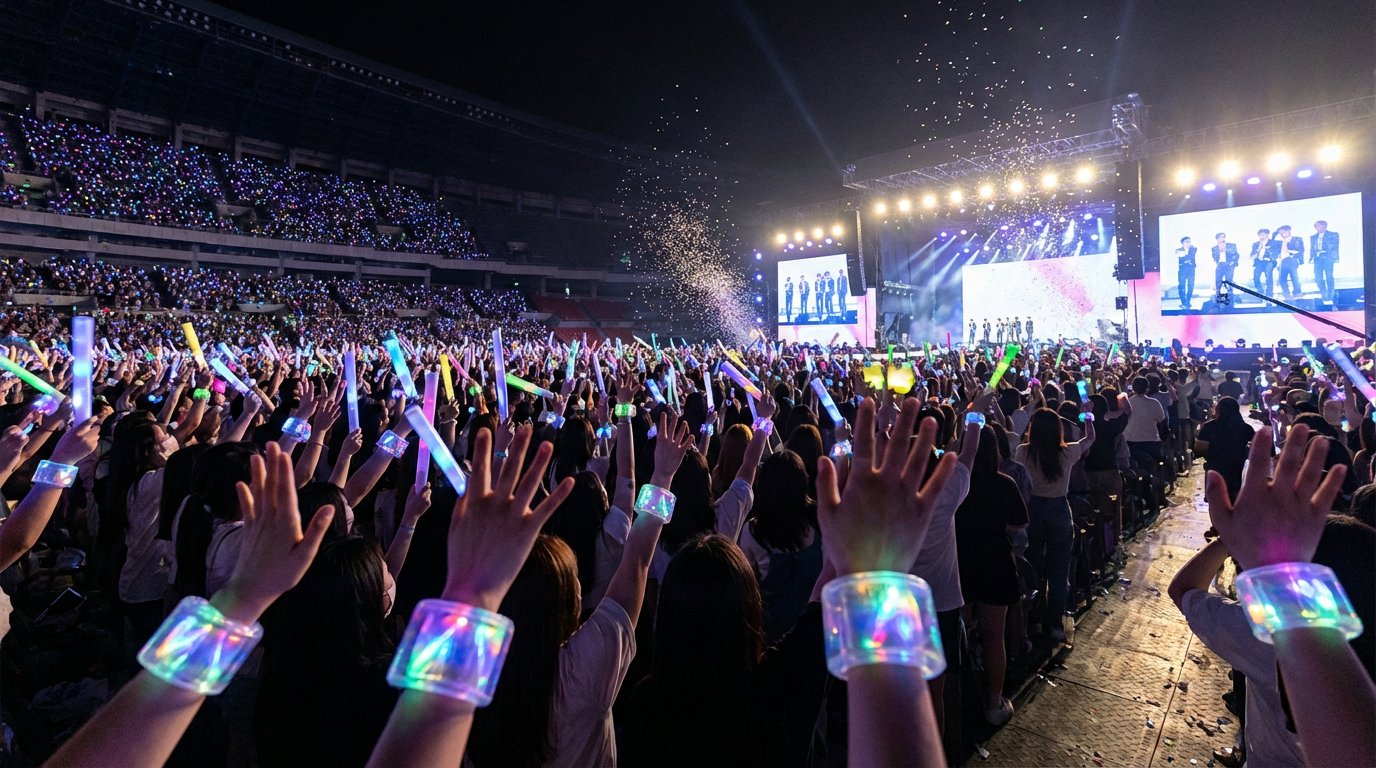
If you have ever scrolled through K-pop fan communities, you have probably come across the word bias more times than you can count. Fans say "My bias is BTS V," or "I have too many biases to count," and newcomers often find themselves confused. What does bias mean in K-pop? And why does it matter so much to millions of fans worldwide?
In this comprehensive guide, we will unpack everything you need to know about the concept of bias in K-pop — from its definition and cultural roots to how to find your own bias and fully enjoy the K-pop experience. Whether you are a new fan or someone looking to understand K-pop culture deeper, this article will give you the complete picture.
What Does "Bias" Mean in K-pop?
In the context of K-pop, bias refers to a fan's favorite member within a K-pop group. It is the person you are most drawn to — the one whose personality, voice, performance style, or visual appearance resonates with you the most. When a fan says "My bias is [member's name]," they are essentially saying that this particular idol holds a special place in their heart compared to other members of the group.
The term is used exclusively in K-pop and Hallyu (Korean Wave) fan culture. In Korean, the word used alongside "bias" is 최애 (chae-ae), which means "favorite." You might also hear fans say 오래된 최애 (oraee-dwen chae-ae), meaning a long-standing favorite, or 단짝 최애 (danjjik chae-ae), referring to a best-friend-like favorite. These Korean expressions add nuance to the concept of bias in ways that pure English cannot fully capture.
It is important to note that having a bias does not mean a fan dislikes other members. On the contrary, most K-pop fans appreciate all members of a group and simply have one member they feel a particularly strong connection with. A fan might love the entire group but feel that their bias is the one who truly represents what they admire most about K-pop culture.
The Cultural Roots of K-pop Bias
The concept of bias in K-pop is deeply intertwined with the para-social relationship — a term coined by sociologists to describe the one-sided emotional connection that audiences develop with media personalities. K-pop idols are specifically trained to build these connections with fans through variety shows, vlogs, fan meetings, and social media interactions. This training is intentional and part of what makes K-pop culture so unique.
Unlike Western pop stars who often maintain a degree of distance from their fans, K-pop idols engage in practices that make fans feel personally connected. They learn fans' names, read handwritten letters, and respond to social media comments. This hyper-personalized fan-idol dynamic creates a strong emotional investment, which naturally leads fans to develop a special preference for one member over others.
The concept also reflects broader Korean cultural values around loyalty and dedication. When fans claim a bias, they often express fierce loyalty — defending their bias in online discussions, streaming their bias's parts in music videos, and supporting every activity their bias participates in. This loyalty is seen as a virtue within K-pop communities, not as obsession.
Why Do Fans Have a Bias?
Understanding why fans develop biases reveals a lot about human psychology and the universal need for connection. Here are the primary reasons fans identify a bias:
1. Emotional Resonance
Fans often connect with a specific idol whose personality mirrors their own or represents qualities they aspire to have. If you are someone who values humor and lightness, you might bias the member known for being the group's mood-maker. If you appreciate quiet strength and depth, you might lean toward the thoughtful, introspective member.
2. Visual Appeal
K-pop groups are carefully assembled not only for talent but also for visual chemistry. Fans are drawn to members whose physical appearance aligns with their aesthetic preferences. This is not superficial — it is a natural part of how humans form preferences and connections.
3. Talent and Skill
Some fans bias members because of specific talents: an exceptional vocalist, a powerful dancer, a charismatic rapper, or a member with a unique stage presence. Skill and artistry are major factors in bias identification.
4. Relatability
Members who share personal stories of struggle, growth, or vulnerability often become fans' biases because of the deep sense of relatability. Knowing that your favorite idol overcame the same challenges you face creates an incredibly powerful bond.
5. Fan Service
K-pop idols actively engage in fan service — small gestures, words, and interactions designed to make fans feel special. Members who consistently go above and beyond in their fan interactions tend to accumulate dedicated biases.
How to Find Your K-pop Bias: A Step-by-Step Guide
New to K-pop and wondering how to find your bias? Here is a practical approach:
Step 1: Watch Full Group Content
Start by watching variety shows, dance practices, concert videos, and behind-the-scenes content featuring the entire group. Observe how each member interacts with others, how they carry themselves on stage, and what roles they play within the group dynamic.
Step 2: Listen to Each Member's Parts
Pay attention to vocal tones, rapping styles, and the energy each member brings to different songs. Some fans find their bias purely through music — a particular voice or rap verse that stands out and draws them in.
Step 3: Observe Personality Through Interviews
Group interviews and live streams reveal a lot about each member's personality. Do you connect with the member who is always laughing? The one who speaks thoughtfully and carefully? The energetic chaos member? Pay attention to who makes you smile.
Step 4: Follow Solo and Sub-Unit Activities
Many groups have solo projects or sub-units that allow individual members to shine in their own way. Following these activities can help you discover a member's individual artistry and decide whether they resonate with you.
Step 5: Trust the Feeling
Ultimately, bias identification is not a calculated decision — it is an emotional one. When you watch a specific member and feel a spark of connection, excitement, or warmth, that is often your bias making themselves known. There is no right or wrong answer, and your bias can evolve over time as you get to know the group better.
Common Types of Bias in K-pop Fandom
Within K-pop communities, fans have developed colorful terminology to describe different types of biases:
Visual Bias: The member whose appearance first catches a fan's eye. In Korean fan culture, this is sometimes referred to as the member with the best 비주얼 (bijeuneol / visual).
Voice Bias: A fan drawn specifically to a member's singing or rapping voice.
Performance Bias: The member whose stage presence, dance skills, or overall performance energy wins a fan over.
Personality Bias: A fan whose favorite is determined primarily by the member's character, humor, and behavior off-stage.
Multi-Bias (멀티) or Ult Bias (Ultimate Bias): When a fan has multiple favorites across different groups, they are called a multi fan. If one stands above all others, that person is the ultimate bias.
The Impact of Bias on K-pop Fan Culture
The bias system has profoundly shaped K-pop fan culture in several ways:
Streaming and Charts
K-pop fans stream music videos and songs specifically to increase views and chart positions for their biases. Streaming parties organized around specific members' lines or scenes in music videos have become a standard practice in K-pop fandom.
Fan Projects
Fans often organize birthday projects for their biases — crowdfunding advertisements on buses, subways, buildings, or even international landmarks. These projects demonstrate the depth of devotion bias can inspire and have become an integral part of K-pop fan culture.
Fan Merchandise
Many fans purchase multiple versions of albums, photocards, and merchandise specifically to collect items featuring their bias. This has created a significant economic dimension to K-pop fandom.
Community Building
Bias identification helps fans find their community within the broader K-pop fandom. Bias-specific sub-fandoms form around shared admiration for a single member, creating tighter-knit groups within the larger fan community.
K-pop Groups Where Finding a Bias is Especially Common
While every K-pop group has fans with biases, certain groups have become famous for how easy — and sometimes overwhelming — it is to develop multiple biases:
BTS
With seven members, each possessing distinct personalities and talents, BTS fans often describe the experience of finding a bias as "impossible but inevitable." Members like RM (leader and rapper), Jin (visual and vocalist), Suga (producer and rapper), J-Hope (dancer and rapper), Jimin (vocalist and dancer), V (vocalist and visual), and Jungkook (main vocalist and all-rounder) each command massive personal fanbases.
BLACKPINK
Four powerful members — Jennie, Rosé, Lisa, and Jisoo — make for intense bias debates. Each member represents a different facet of the K-pop ideal, from Jennie's confident rap style to Jisoo's actress-like elegance.
Stray Kids
With eight members (previously nine), Stray Kids is known for its incredibly diverse sound and concept. The group's self-producing identity means fans can bias members for reasons ranging from songwriting talent to stage presence.
NewJeans
This newer generation group has quickly captured fans with its fresh concept. The five members each bring a distinct vibe — from Danielle's Australian-Korean background to Hanni's infectious energy — making bias selection a delightful challenge.
How K-pop Bias Helps You Learn Korean
Here is a bonus: having a K-pop bias can actually accelerate your Korean language learning. Here is how:
1. Motivated Vocabulary Building
When you have a bias, you desperately want to understand what they are saying in interviews, vlogs, and live streams. This motivation drives you to learn Korean vocabulary, phrases, and expressions much faster than traditional study methods.
2. Cultural Immersion Through Content
You will naturally consume a massive amount of Korean content — from music videos to variety shows to documentaries. This immersion is one of the most effective ways to develop language skills naturally.
3. Engagement with Fan Community
Participating in K-pop fan communities requires reading and writing Korean. Fan translations, discussions, and social media interactions all provide authentic reading and writing practice.
4. Memorization Through Emotional Connection
Neuroscience research shows that emotional experiences create stronger memories. When you learn Korean phrases related to your bias — their name, catchphrases, or song lyrics — you are more likely to remember them because of the emotional connection.
5. Learning Honorifics Naturally
K-pop introduces learners to Korean honorifics organically. You will naturally encounter 최애 (chae-ae / favorite), 언니 (eonni / older sister), 오빠 (oppa / older brother), 선배 (seonbae / senior), and other honorifics in context, helping you understand when and how to use them.
Practical Korean Phrases Related to K-pop Fandom
Now that you understand what bias means, here are some essential Korean phrases every K-pop fan should know:
Examples in context:
"나 오늘 컴백 했어!" (Na oneul keombaek haess-eo!) — "My bias came back today!" (referring to a new release)
"이건 내 최애의 라이트스틱이야." (Igeon nae chae-ae-ui raiteuseutik-iya.) — "This is my bias's lightstick."
"멤버들 다 너무 좋아서 비스레시 생겼어." (Meom-eodeul da neuom joh-aseo biseureshi saenggyeoss-eo.) — "I like all the members so much, I got bias-wrecked."
4-Week Challenge: Use K-pop to Learn Korean
Here is a structured plan to use your K-pop passion for language learning:
Week 1: Immersion and Discovery
Watch three BTS or BLACKPINK interviews with Korean subtitles
Write down five new Korean words per day
Learn to read and write all members' names in Hangul
Week 2: Vocabulary Expansion
Learn 30 Korean fandom-related words (bias, lightstick, comeback, etc.)
Watch a music video and try to identify words you recognize
Start using a Korean flashcard app (like Anki) with K-pop vocabulary
Week 3: Listening and Speaking
Practice shadowing (模仿) Korean phrases from fan videos
Watch a V-Live or Bubble stream with Korean subtitles
Try to write a short Korean sentence about your bias
Week 4: Production and Community
Read Korean fan discussions on Twitter/X or Reddit
Write a short paragraph in Korean about why your bias is your favorite
Explore TalkMe AI to practice Korean conversation about K-pop topics with an AI language partner
The Difference Between "Bias" and Other Terms
It is worth clarifying how the K-pop term bias differs from similar-sounding terms in other contexts:
Bias in statistics and everyday English refers to a tendency, prejudice, or inclination. In K-pop, however, it carries a purely positive connotation — it means admiration, love, and favoritism.
Bias in fashion refers to the diagonal direction of fabric cutting. This has nothing to do with K-pop fandom, though K-pop idols themselves are often fashion icons.
Bias in media studies refers to editorial slant or journalistic partiality. Again, unrelated to K-pop fan culture.
The K-pop usage of "bias" is entirely unique to that community and represents a beautiful example of how language evolves within subcultures.
FAQs About K-pop Bias
Q: Is it okay to have more than one bias?
A: Absolutely. Many fans identify as "multi-stans" who have favorites across multiple groups. Even within a single group, some fans have multiple biases, sometimes called "bias wrecking" — where members other than your main bias also capture your heart.
Q: Can your bias change over time?
A: Yes, and this is very common. As you get to know a group better, your feelings may evolve. A member who initially did not stand out might become your bias after learning more about their personality and journey.
Q: Do K-pop idols know who their fans' biases are?
A: Through fan meetings, fan letters, social media interactions, and fan project presentations, idols often become aware of how popular specific members are. Some idols playfully acknowledge when they feel they need to catch up to a member's popularity.
Q: Does having a bias mean you are not a "true fan"?
A: No. K-pop fandom celebrates the diversity of fan preferences. Whether you bias one member, multiple members, or love the entire group equally, you are a valued member of the fandom.
Q: How do I decide between multiple potential biases?
A: There is no need to force a decision. Let your feelings develop naturally. Many fans find that the longer they spend with a group, the more obvious their bias becomes.
Q: Can non-Korean fans have a bias?
A: Of course. K-pop is a global phenomenon, and fans from every continent have biases. The K-pop industry actively courts international fans, and most groups have members who serve as "visual" or language bridge members who connect with international audiences.
Conclusion: Your Bias Journey Starts Here
Now you have a complete understanding of what bias means in K-pop and why it plays such an important role in this vibrant global fan culture. Whether you have already found your bias or are still searching, remember that the journey is part of the fun.
K-pop bias culture is ultimately about human connection — the joy of finding someone whose art, personality, and energy brings happiness into your life. It is a reminder that music transcends language and cultural barriers, connecting people across the globe through shared admiration and passion.
If you are inspired to learn Korean through your K-pop interest, consider using TalkMe at blog.talkme.ai or talkme.ai to practice your Korean skills with AI-powered conversations. Imagine being able to converse with your bias's personality in Korean, practice the phrases you hear in their songs, or discuss their latest release in real-time — TalkMe makes all of this possible.
Your bias is waiting. Your K-pop journey is just beginning. Enjoy every moment of it. 파이팅!

Comments
No comments yet.
Leave a Comment