
Job interviews are stressful enough in your native language. When the conversation switches to English, even strong candidates can freeze up, forget simple words, or lose confidence. If you’ve ever walked out of an interview thinking, “I knew the answer, but I just couldn’t say it,” you’re not alone.
The good news: interview English is a skill you can train, just like any other professional ability.
Why English Job Interviews Feel So Difficult
Many candidates assume the problem is vocabulary. In reality, the issue is usually real-time thinking and speaking under pressure. Interviews combine several challenges at once:
You must understand questions quickly
You need to organize your thoughts clearly
You’re expected to sound professional and confident
You only get one chance to respond
Unlike casual conversations, interviews require structured, precise answers. That’s why even people with decent English skills can struggle when the stakes are high.
Where Most Candidates Get Stuck
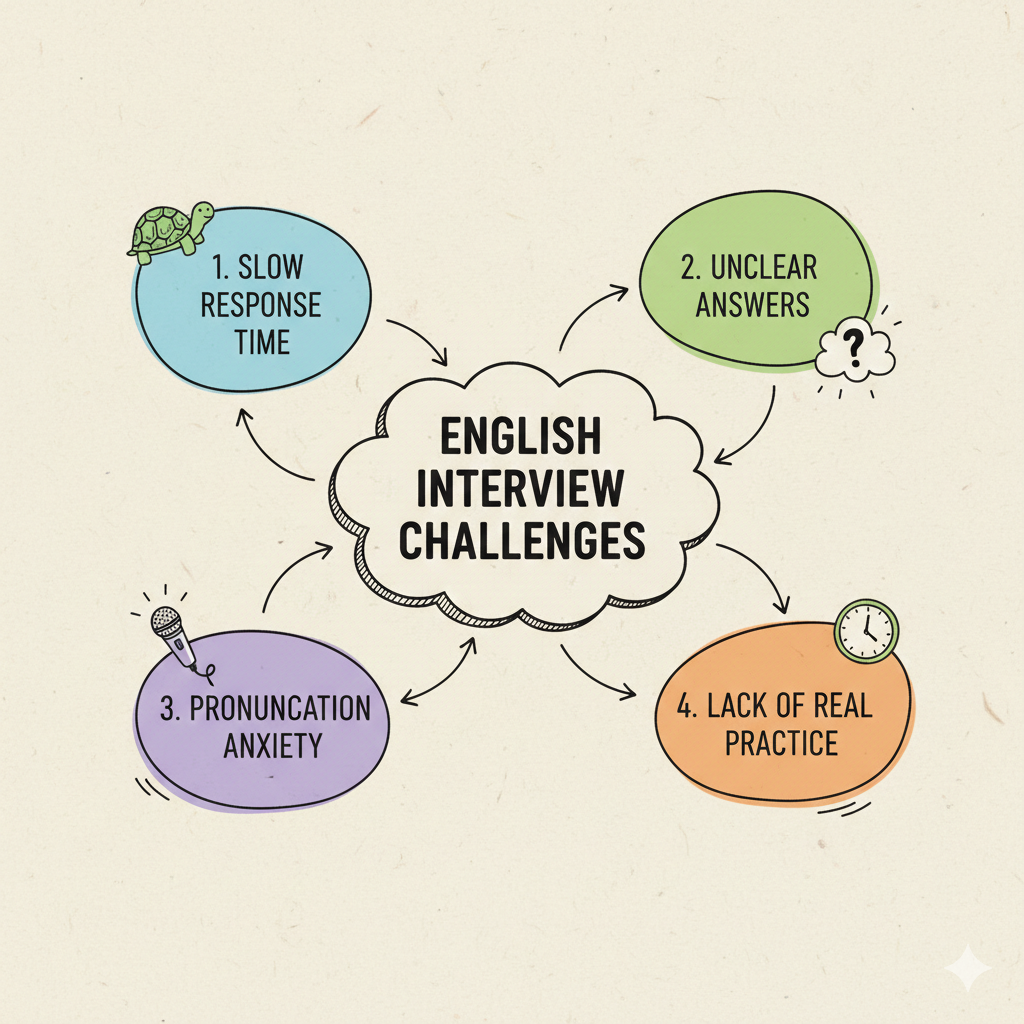
Here are the most common breakdown points:
Slow response time
You understand the question, but your brain needs extra seconds to build the answer.Overly simple or unclear answers
Instead of showing your real experience, you give short or vague responses.Pronunciation anxiety
You worry about how you sound, which makes you hesitate even more.Lack of practice with real questions
Reading answers is not the same as speaking them out loud.
How to Handle English Interviews: A Step-by-Step Plan
.png)
🧭 Step 1: Learn the Most Common Question Types
Most interviews follow predictable patterns:
Tell me about yourself
Why do you want this role?
Describe a challenge you solved
What are your strengths and weaknesses?
Instead of memorizing scripts, prepare flexible answers using your real experience.
🧩 Step 2: Use a Simple Answer Structure
A clear structure helps you think faster. One of the most effective methods is:
Situation → Action → Result
Example:
Situation: “Our team missed a product deadline.”
Action: “I reorganized the workflow and assigned clearer responsibilities.”
Result: “We delivered the next release two weeks early.”
This keeps your answers focused and professional.
🎙️ Step 3: Practice Speaking, Not Just Reading
Reading answers silently doesn’t build speaking confidence. You need:
Realistic questions
Immediate responses
Repetition in different scenarios
This is where tools like TalkMe AI become useful. The app simulates real interview situations, lets you role-play with an AI interviewer, and adapts to your level so you can practice answering questions naturally instead of memorizing scripts.
⏱️ Step 4: Train for Time Pressure
In real interviews, you can’t pause for long. Practice with:
30–60 second answer limits
Random question prompts
Mock interview sessions
This helps your brain learn to respond quickly and clearly.
🔁 Step 5: Review and Improve
After each practice session:
Notice words you repeated too often
Check if your answers had a clear result
Improve one small thing each time
Consistent, focused practice is more effective than long, occasional study sessions.
Quick Comparison: Weak vs. Strong Interview Answers
This kind of contrast is ideal for a visual chart or infographic in the article.
Practical Tips and Common Mistakes
Tips that actually work
Speak your answers out loud every day
Record yourself and listen back
Focus on clarity, not perfect grammar
Practice with realistic scenarios, not textbooks
Common mistakes to avoid
Memorizing full scripts
Using overly complex vocabulary
Speaking too fast to “sound fluent”
Practicing only in your head
If you don’t have a partner to practice with, an AI conversation tool like TalkMe can provide daily speaking practice and instant feedback without scheduling sessions.
FAQ
How long does it take to improve interview English?
With daily speaking practice, many learners notice improvement in 2–4 weeks, especially in response speed and confidence.
Should I memorize answers?
No. Memorizing sounds unnatural. Instead, practice structured responses based on your real experience.
What if I don’t understand a question?
It’s acceptable to ask:
“Could you please repeat or clarify the question?”
Can AI really help with interview practice?
Yes. Tools like TalkMe simulate real conversations, provide role-play interviews, and let you practice anytime without pressure.
Key Takeaways
Interview English is about structured, confident speaking
Most problems come from lack of real-time practice
Use simple answer frameworks to stay clear and focused
Practice under time pressure to build confidence
If you want to feel more prepared before your next interview, start practicing real conversations every day.
Search for TalkMe on the App Store or Google Play, download it, and run a few mock interviews this week. A few minutes of speaking practice each day can make a noticeable difference when the real interview comes.