

When you listen to a fluent speaker, you don’t just hear words—you hear feelings. A simple sentence can sound excited, annoyed, curious, or sarcastic depending on the tone of voice. That musical quality in speech is called intonation, and it’s one of the biggest factors that separates textbook English from natural, expressive communication.
Many learners know the right vocabulary and grammar, yet still sound flat or robotic. The missing piece is often how the voice rises, falls, stretches, or softens to match emotion.
Why Intonation Matters for Emotional Expression
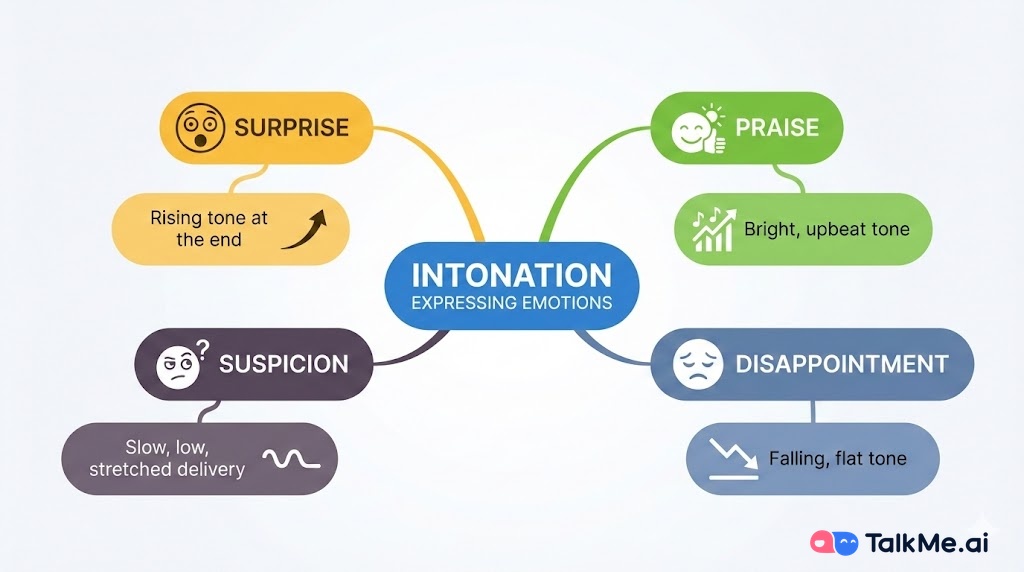
Intonation is the rise and fall of your voice when you speak. It signals meaning beyond the literal words. Consider the sentence:
“You finished already.”
With different intonation, it could express:
Surprise: rising tone at the end
Suspicion: slow, low, stretched delivery
Praise: bright, upbeat tone
Disappointment: falling, flat tone
Native speakers rely heavily on these vocal patterns. Without them, speech may sound unnatural or confusing, even if the words are correct.
Where Learners Usually Struggle
Most learners focus on:
Vocabulary lists
Grammar rules
Pronunciation of individual sounds
But intonation involves rhythm, stress, and emotional context. Common problems include:
Speaking every sentence with the same tone
Using rising tones where a falling tone is expected
Sounding overly formal or monotone
Misunderstanding emotional cues in conversation
These issues can lead to awkward interactions or miscommunication.
How to Use Intonation to Express Emotions: Step-by-Step
Step 1: Notice Emotional Patterns
Listen to native speakers in movies, podcasts, or conversations. Focus on how the voice changes with different feelings.
Practice idea:
Listen to one short dialogue and write down what emotion each line expresses.
Step 2: Learn the Basic Intonation Types
Start with three core patterns:
Say the same sentence using each pattern to feel the difference.
Step 3: Match Tone to Real Emotions
Practice with short, everyday phrases:
“Really?” → surprise
“Oh, great.” → excitement or sarcasm
“That’s fine.” → calm acceptance or hidden frustration
Record yourself and compare with native examples.
Step 4: Use Role-Play Conversations
Emotion shows best in context. Practice short dialogues with different moods:
Apologizing to a friend
Complaining about a late bus
Congratulating a colleague
Apps with AI conversation partners, such as TalkMe, can simulate real-life situations and let you repeat the same scene with different emotional tones. This kind of interactive practice helps build natural rhythm and expression.
Step 5: Record, Review, and Adjust
Use your phone or a speaking app to:
Record a short dialogue.
Listen for emotional clarity.
Repeat with stronger or softer intonation.
This loop builds awareness and control over your voice.
Quick Intonation Guide by Emotion
This table works well as a quick reference chart for learners practicing emotional expression.
Tips, Suggestions, and Common Mistakes
Helpful tips
Exaggerate intonation slightly during practice.
Watch actors or presenters and mimic their tone.
Practice short emotional phrases daily.
Common mistakes
Speaking every sentence with the same pitch.
Overusing rising tones, which can sound unsure.
Focusing only on pronunciation, not emotion.
Tool suggestion
If you don’t have a speaking partner, using an AI tutor in TalkMe can help you practice emotional conversations repeatedly, with feedback and role-play scenarios.
FAQ
Why do I sound robotic even if my pronunciation is correct?
Because pronunciation focuses on individual sounds, while natural speech depends heavily on rhythm, stress, and intonation.
Is intonation the same in every language?
No. Each language uses different pitch patterns. That’s why direct translation of tone from your native language may sound unnatural.
How long does it take to improve emotional intonation?
With daily speaking practice, many learners notice improvement in 2–4 weeks.
Can an app really help with emotional speaking?
Yes, especially apps that simulate real conversations. TalkMe, for example, allows you to practice role-plays where tone and emotion matter, not just vocabulary.
Key Takeaways
Intonation carries emotion and meaning beyond words.
Flat speech often comes from ignoring pitch and rhythm.
Listening, mimicking, and role-playing are the fastest ways to improve.
Recording your voice helps you notice emotional differences.
If you want structured, interactive speaking practice, try TalkMe. You can find it on the App Store or Google Play by searching “TalkMe” and start practicing real-life conversations with an AI tutor today.




Comments
No comments yet.
Leave a Comment