
It happens at networking events, in office elevators, at parties, or even while waiting in line for coffee. You know you should say something, but your mind goes blank. Many people have trouble making small talk, even if they’re confident in other areas of life. The good news is that small talk is not a talent you’re born with—it’s a skill you can practice and improve.
Small talk is the short, friendly conversation that helps people connect. It’s not meant to be deep or serious. Instead, it builds comfort and trust, making it easier to move into more meaningful topics later. When you avoid small talk, social situations can feel awkward, and opportunities—both personal and professional—can slip away.
Why So Many People Struggle
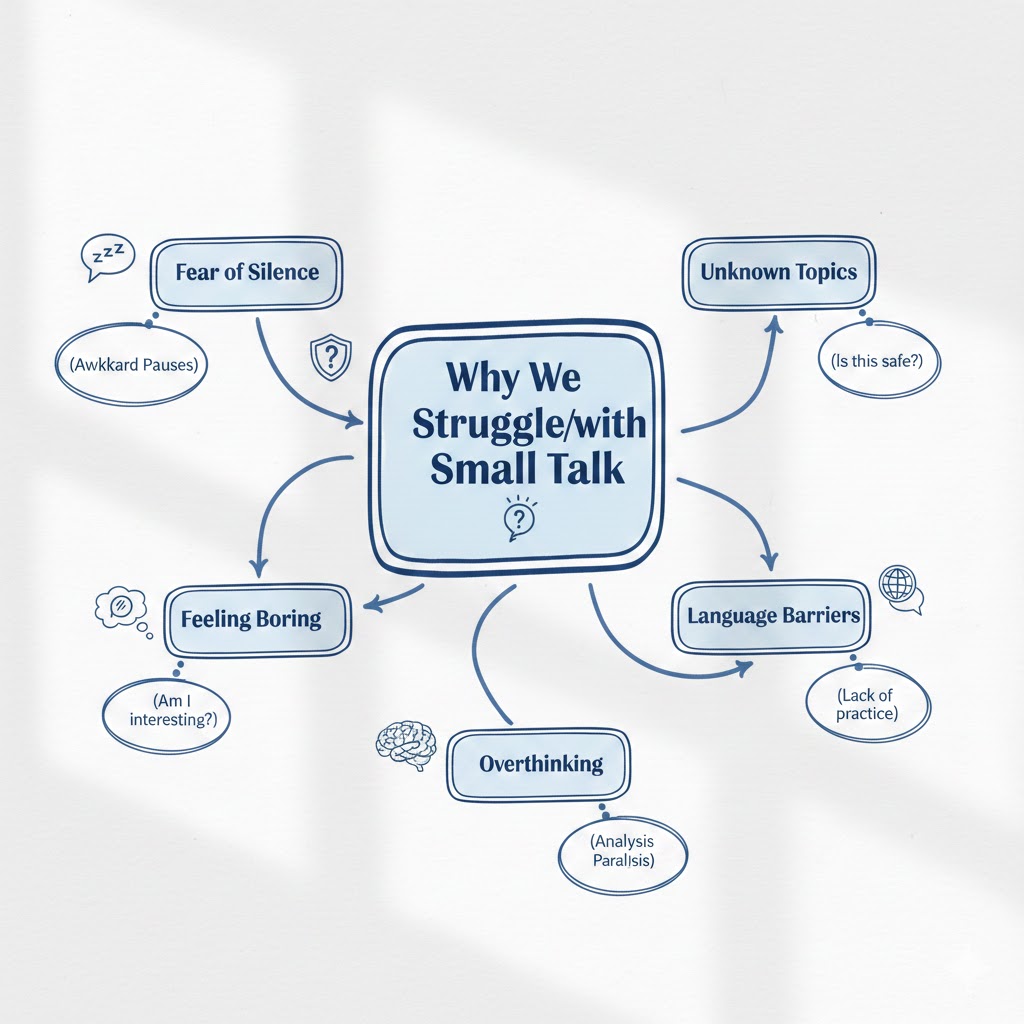
If you feel nervous or stuck during casual conversations, you’re not alone. Here are some common reasons:
Fear of awkward silence
Not knowing what topics are safe or appropriate
Worry about sounding boring or uninteresting
Language barriers or lack of speaking practice
Overthinking every sentence before you say it
Small talk moves quickly. If you pause too long or overanalyze, the moment passes. That’s why learning a simple structure helps.
How to Get Better at Small Talk: A Step-by-Step Guide
1. Start with a simple observation
Look around and comment on something neutral.
“This place is busier than usual.”
“The weather changed so fast today.”
This works because it’s easy for the other person to respond.
2. Ask open-ended questions
Avoid questions that can be answered with just “yes” or “no.”
“How did you hear about this event?”
“What kind of projects are you working on lately?”
3. Listen and build on their answer
Instead of planning your next line, focus on what they say.
If they say:
“I just moved here from Toronto.”
You can reply:
“Oh, nice. What made you decide to move?”
4. Share a little about yourself
Small talk is a two-way street. Offer short, relevant responses.
“I moved here last year too. Still exploring the city.”
Keep it brief and natural.
5. Close the conversation politely
You don’t have to talk forever. A friendly ending keeps things positive.
“It was great talking with you.”
“Enjoy the rest of the event.”
Quick Conversation Flow Chart
This simple flow keeps conversations moving without pressure.
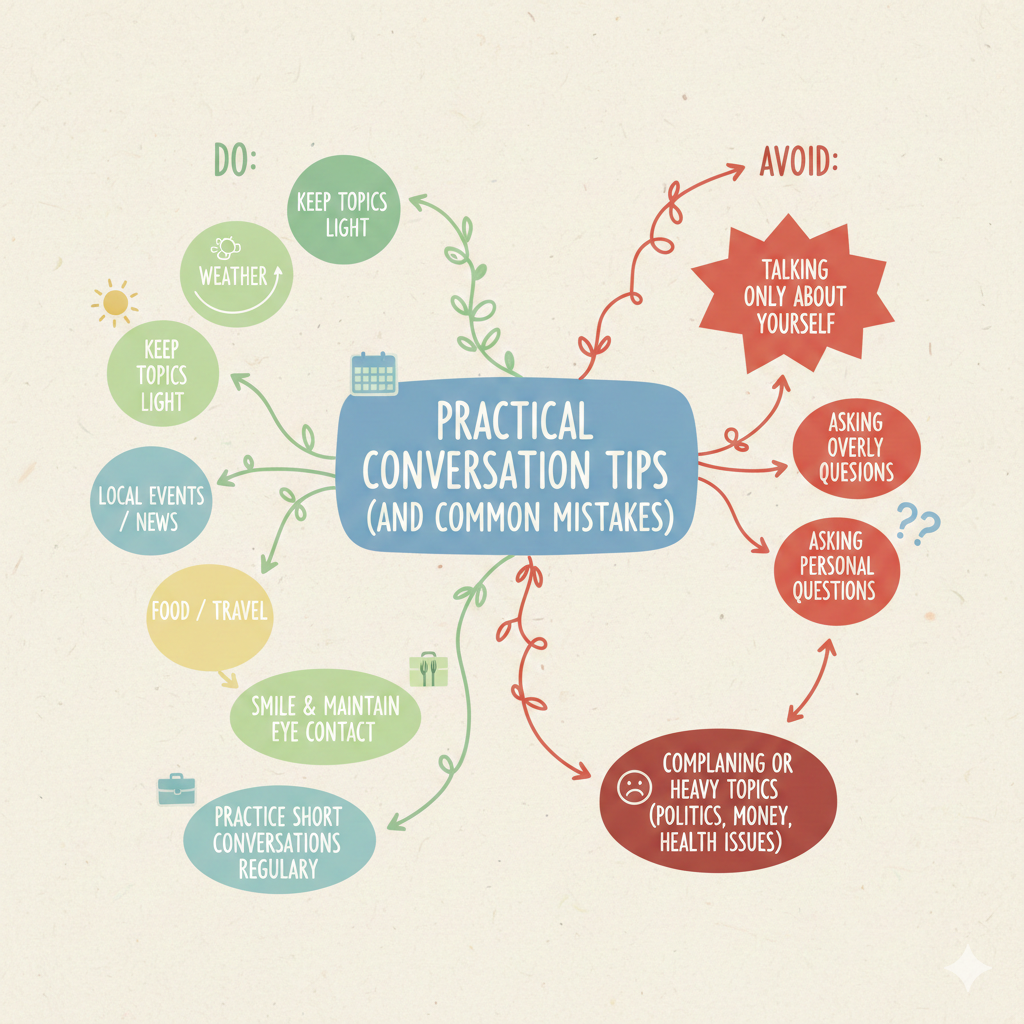
Practical Tips (and Common Mistakes)
Do:
Keep topics light: weather, events, food, work, hobbies
Smile and maintain eye contact
Practice short conversations regularly
Avoid:
Talking only about yourself
Asking overly personal questions
Complaining or bringing up heavy topics
If you feel nervous speaking in English or another language, practicing with an AI conversation partner can help. Tools like TalkMe let you simulate everyday situations—like meeting someone at a party or chatting with a coworker—so you can build confidence before real interactions.
FAQ
Is small talk really important?
Yes. It helps build trust, reduce social tension, and open doors to deeper conversations.
What if I run out of things to say?
Ask a simple follow-up question. People usually enjoy talking about their experiences.
How can I practice small talk if I’m shy?
Start with short, low-pressure conversations. You can also use apps like TalkMe to practice with a lifelike AI tutor before talking to real people.
How long should small talk last?
Usually just a few minutes. The goal is connection, not a long discussion.
Key Takeaways
Small talk is a learnable skill.
Use simple observations and open-ended questions.
Listen actively and respond naturally.
Practice regularly to build confidence.
If you want a safe place to practice real-life conversations, try TalkMe. You can simulate everyday scenarios, role-play social situations, and get comfortable speaking at your own pace. Search for TalkMe on the App Store or Google Play and start practicing today.