
English nouns seem simple at first, but the difference between countable and uncountable nouns often causes confusion. Many learners know the rules in theory, yet still hesitate when choosing words like much or many, or when deciding whether a noun needs an article.
Understanding this distinction makes your English sound more natural and accurate in everyday conversations.
What Are Countable and Uncountable Nouns?
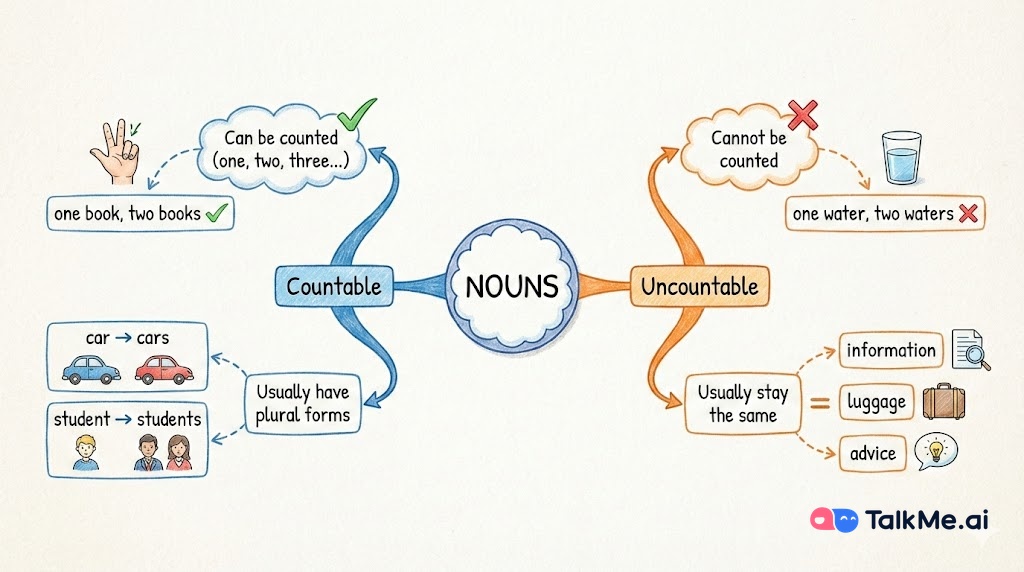
A countable noun refers to something you can count as individual items. These nouns usually have singular and plural forms.
Examples:
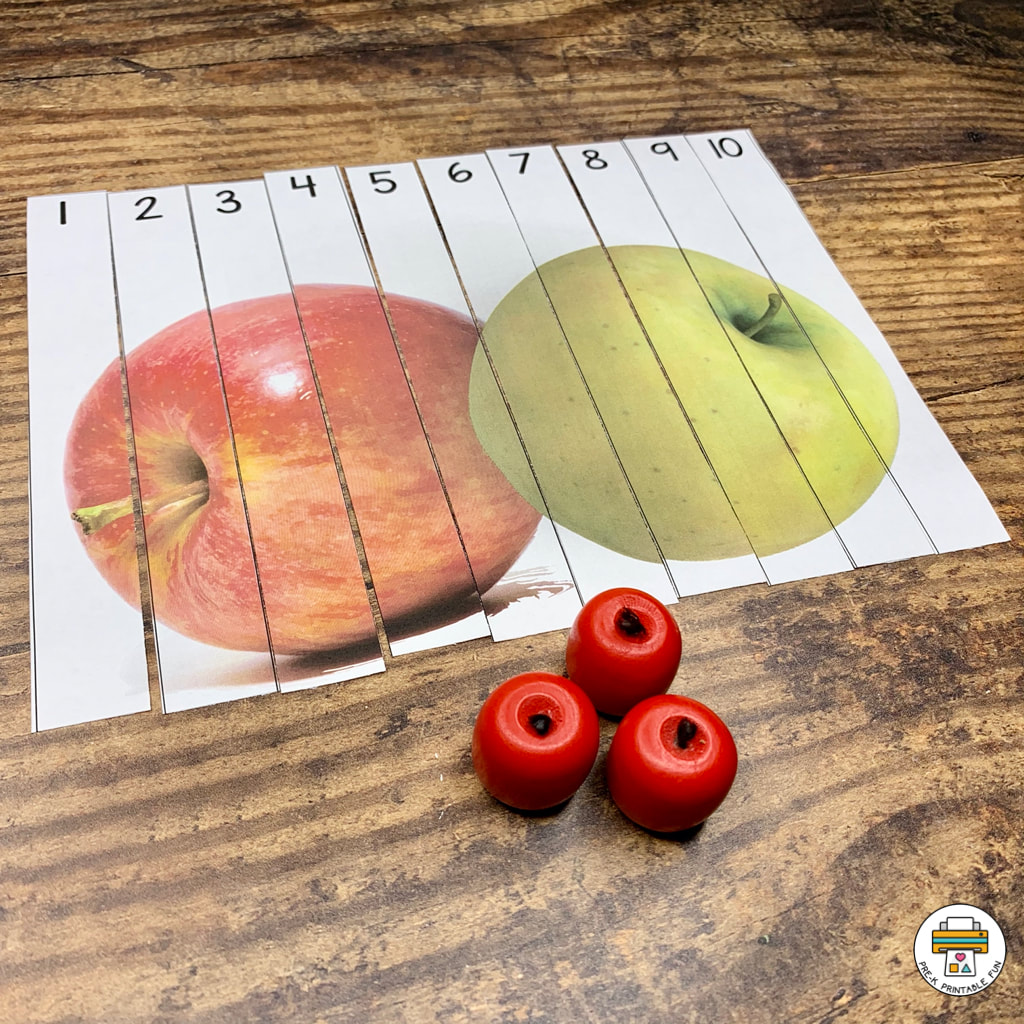
one apple, two apples
a chair, three chairs
an idea, many ideas
An uncountable noun refers to things that are not counted as separate units. They are treated as a whole or a mass.
Examples:
water
information
rice
furniture
Where Do Learners Usually Struggle?
Most mistakes happen in three situations:
Choosing between much and many
Using articles like a/an
Forming plurals incorrectly
For example:
❌ I have many homework.
✔️ I have much homework.
❌ She gave me an advice.
✔️ She gave me some advice.
These errors are common because many languages treat these nouns differently from English.
How to Use Countable and Uncountable Nouns Correctly
Step 1: Ask “Can I count it?”
If you can say one, two, three…, it’s countable.
one book, two books ✔️
one water, two waters ❌
Step 2: Check for plural forms
Countable nouns usually have plural forms.
car → cars
student → students
Uncountable nouns usually stay the same:
information
luggage
advice
Step 3: Choose the right quantifier
Use different words depending on the noun type.
Step 4: Use containers or units
To talk about quantities of uncountable nouns, use measurement words.
Common Countable vs Uncountable Nouns
Tips, Advice, and Common Mistakes
1. Don’t add “-s” to uncountable nouns
❌ informations
✔️ information
2. Avoid “a/an” with uncountable nouns
❌ an equipment
✔️ some equipment
3. Learn common exceptions
Some nouns change meaning:
chicken (animal, countable)
chicken (food, uncountable)
4. Practice in real conversations
Rules are easier to remember when you use them in speaking. An AI conversation app like TalkMe lets you practice naturally with a lifelike tutor, so you hear and use these structures in everyday scenarios instead of just memorizing lists.
Quick Reference Chart
FAQ
Can a noun be both countable and uncountable?
Yes. Some nouns change meaning depending on context.
I drank coffee. (uncountable: the drink)
I ordered two coffees. (countable: two cups)
Is “food” countable or uncountable?
Usually uncountable:
I love food.
But it can be countable when talking about types:
Italian and Thai foods are popular.
How can I remember these rules faster?
Instead of memorizing long lists, practice using them in real conversations. Apps like TalkMe simulate daily situations so you can naturally choose the right forms while speaking.
Key Takeaways
Countable nouns can be counted and have plural forms.
Uncountable nouns are treated as a mass and don’t use plurals.
Use the right quantifiers: many for countable, much for uncountable.
Use units like a piece of or a glass of for uncountable nouns.
If you want to turn these rules into real speaking skills, start practicing with an AI tutor. Download TalkMe from the App Store or Google Play and try real-life conversations that help you use grammar correctly without overthinking.




Comments
No comments yet.
Leave a Comment